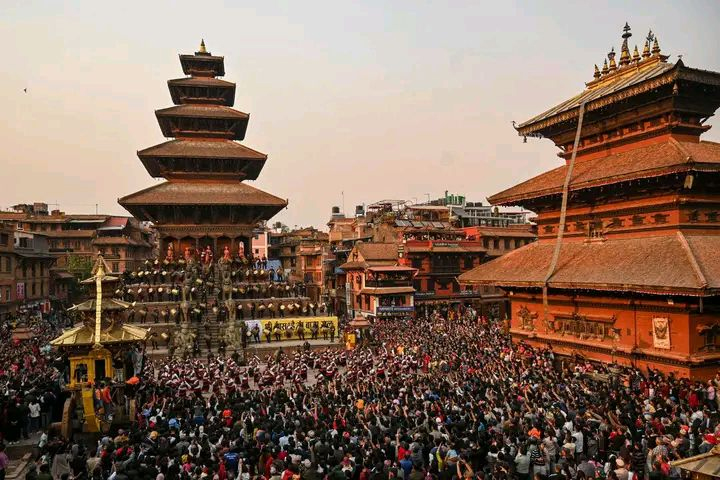
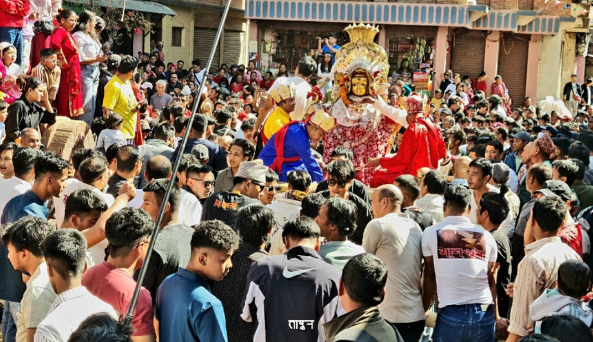
Sakimana Punhi (Sakimila Punhi) or the full moon day in November (some time in December) but 2 weeks after Tihar festival. Religious rites and Jatras are held in a number of places on this this day. The offering and worships at Namobuddha, Bauddha, Swayambhu are noted festivals. Likewise, Jatra of Lord Chandra Binayak, the Ganesh at Chabahil is also equally remarkable. Devotees visit shrines of Lord Bishnu (Narayan) like Budhanilkantha, Ichnagu, Changu, Sheshnarayan etc. including Adinath temple at Chobhar as well.
The Newars on this day prepare and consume boiled arum, boiled sweet potato and roasted grains is the festival. Realising that these undersoil products are rich source of vitamin, fibre, protein and help stand fit to face coming winter season.
The most fascinating part of this festival is making Halimali in front of the deities of the temples at different locations. Swayambhu, Asan, Itumbahal, Golmadhi (Bhaktapur), various temples in Lalitpur, Thecho, Sunakothi, Thimi, Sankhu are mention worthy.

Moreover, Dapha Bhajan (chanting religious hymns) takes place in the evening at religiously important places in the Kathmandu Valley and other places.
In Newar culture, Halimali (or Halimali Bwoyegu) refers to the traditional practice of creating intricate artistic patterns like images of gods, temples, and auspicious symbols by arranging different types of roasted grains, maize, wheat, soybeans, and other ingredients g in front of temples, courtyards, and stupas (chaityas).
The activity of Halimali Bwoyegu (showcasing the grain art) is accompanied by traditional music and devotional singing (Dapha Bhajan) performed by local community groups as said above. The use of various grains reflects the post-harvest season, serving as an expression of gratitude for a bountiful yield and ensuring future abundance and fertility.
The grains used to create the Halimali designs are later distributed as prasad (a religious offering distributed to devotees).

This practice highlights the rich connection of the Newar people to agriculture, art, and their community, serving as a reminder of their heritage and the importance of returning to nature and seeing divinity in food. In essence, Halimali is not an independent festival, but a unique and visually significant ritual practice within the larger Sakimana Punhi celebration. (By Ram Dangol)