Autobiography of senior Communist leader Bishnu Bahadur Manandhar launched
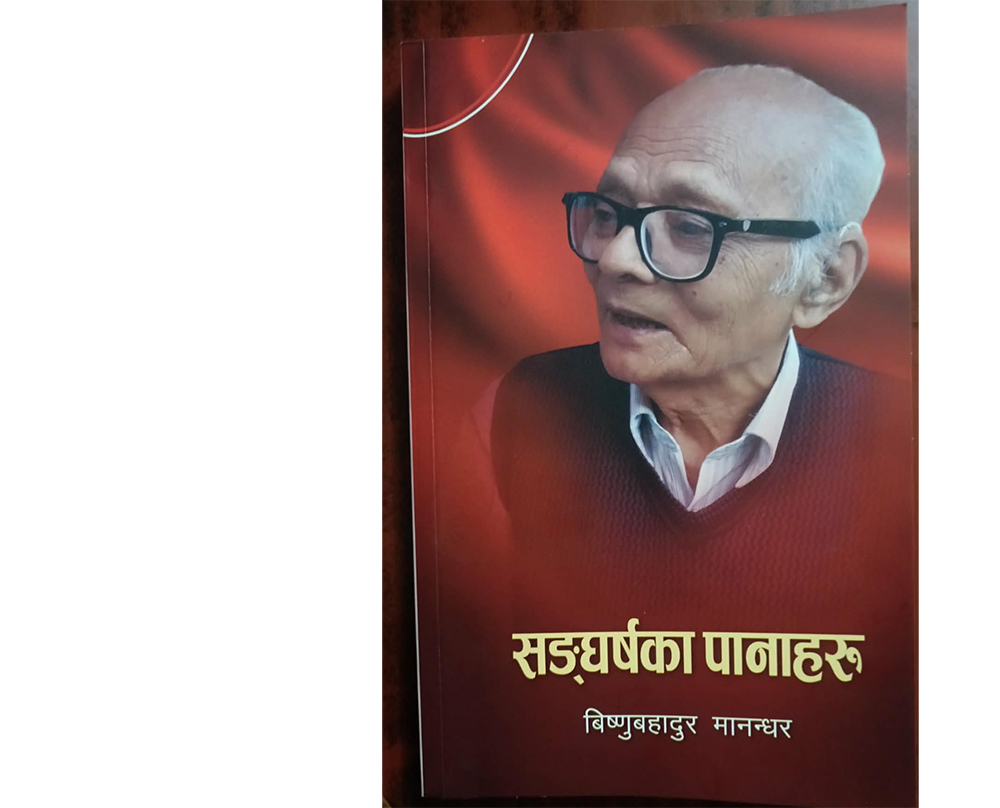
An autobiography of senior leader (late) Bishnu Bahadur Manandhar was launched amidst a function in Kathmandu on April 11, 2026. ‘Sangharshaka Panaharu’ (the pages on struggles) is a book written by veteran communist leader and champion of freedom movement Manandhar. Late Manandhar (1930 – 2021) was the General Secretary of the CPN (United) for nearly […]

An autobiography of senior leader (late) Bishnu Bahadur Manandhar was launched amidst a function in Kathmandu on April 11, 2026. ‘Sangharshaka Panaharu’ (the pages on struggles) is a book written by veteran communist leader and champion of freedom movement Manandhar.
Late Manandhar (1930 – 2021) was the General Secretary of the CPN (United) for nearly three decades. He started political activities joining the Nepali Congress and later became member of the Nepal Communist Party in 1953. During his entire political career he was raising voices for the country and people joining the anti-Rana movement. Moreover, he never accepted the state’s official position but played crucial roles to unite Nepal’s communist movement.
The farmers’ movement in Rautahat in 1952 AD was led by the All Nepal Farmers’ Association, a communist front. The leader of the movement against burning documents and fighting in favour of farmers’ rights was none other than Bishnu Bahadur.
Various academician and political personalities spoke on the struggles and sacrifices of Manandhar on the occasion. They include Dr.Surendra KC, Hari Roka, Former Minister Er. Ganesh Shah, Former Minister Chandra Dev Joshi, Former Minister Thakur Sharma, Former Minister and only son of leader Manandhar Sunil Kumar Manandhar.
On the occasion, former Minister Nilambar Acharya stated that a leader like Bishnu Bahadur Manandhar is rarely possible to find in today’s circumstances.
Although Manandhar belonged to a wealthy family, lived a very simple and modest life. Manandhar is remembered evem today for his clean personality and humble lifestyle. All the speakers, who spoke on the occasion, described him as an exemplary leader of the peasants of Nepal, communist, and democratic movements.
In the book, published by his son Sunil Manandhar, former Environment Minister, Manandhar has elaborated the social, political and administrative situations of Nepal and how such factors made people’s life difficult. Raising voice or staging demonstrations against such autocratic regime was considered a crime punishable under existing law.