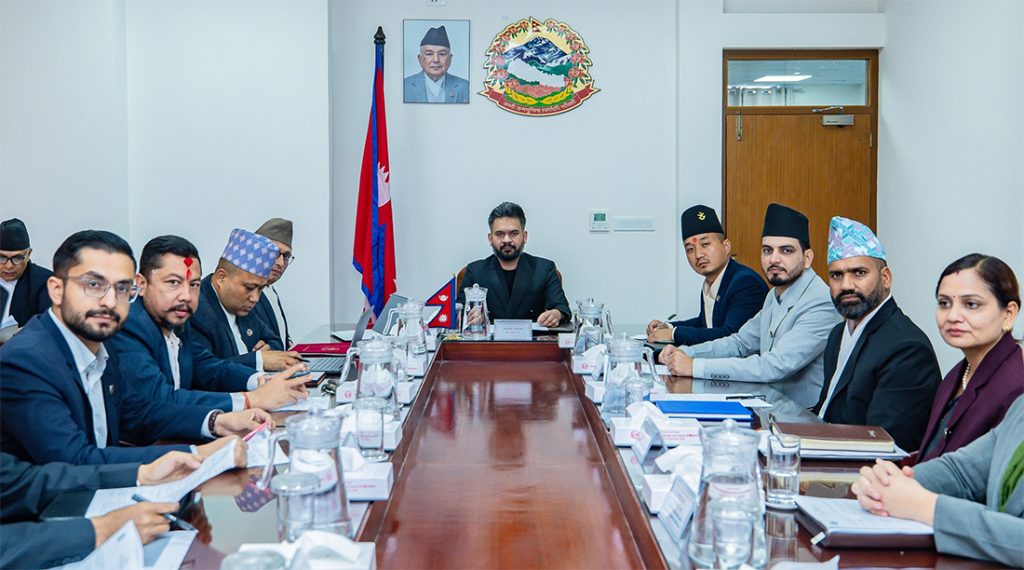
The impressive revolution that Gen Z activists, leaders and participants launched in September, 2025 has officially been recognized as People’s Movement; it could now legitimately join the space next to People’s Movement II of 2006 that followed People’s Movement 1 of 1990. The recent agreement between Nepal Government and Gen Z stands not only as witness to that fact but acts like the mission statement –principled reference base – of what Nepali youths’ aspire after and seek to chart way to achieve in matters of good governance and anti-corruption. Those who could not appreciate it had better look for convincing logic to explain the vacuum in governance, absence of security and deficit in politics that Nepalis and the whole country felt and suffered from in the aftermath of September 8 and 9, 2025.Similarly those who dismiss the document as just a paper-work between some Gen Z youths and the Prime Minister they nominated should revise their lesson on what continuity of government in a sovereign country actually refers to. The accord has actually offered the Gen Z revolution – Gen Z PM-III – a collective face, a working structure and direction for future. The collective identity gets well-reflected, not in a specific leader, but in a specific representative-signatory – Bhoj Bikram Thapa – who initiated the agreement as representative of the Gen Z revolution’s families of martyrs and the injured. Interim Prime Minister Sushila Karki signed the document on behalf of Nepal Government; the cabinet later formally endorsed it. The Gen Z aspirations could be structured through provisions mentioned in the accord particularly the six such as –Task Force for martyrs and the injured, Permanent Commission for controlling corruption, High Level Commission to investigate political corruption, Mechanism for study and reform in security matters, High Level Commission for recommending reforms in or amendment to constitution, and establishment of Gen Z Council to advise government on changes they seek in governance and politics, public administration and judicial system. The direction towards which Gen Z activists seek to head and lead the country’s politics could be deciphered through the preamble in which they express commitment to the current constitution and its continuity accompanied by innovative smart changes. All concerned with values of democracy, good governance, accountability, social justice and transparency in public administration should now move forward to facilitate the way to implement provisions of the accord. Gen Z activists should also be effortful in it and ready to have dialogue with dissenters through bringing about unity among themselves with broad mind to accommodate all; government of the day and political parties in particular should make it a point to honour and own it besides participating in all phases of implementation.