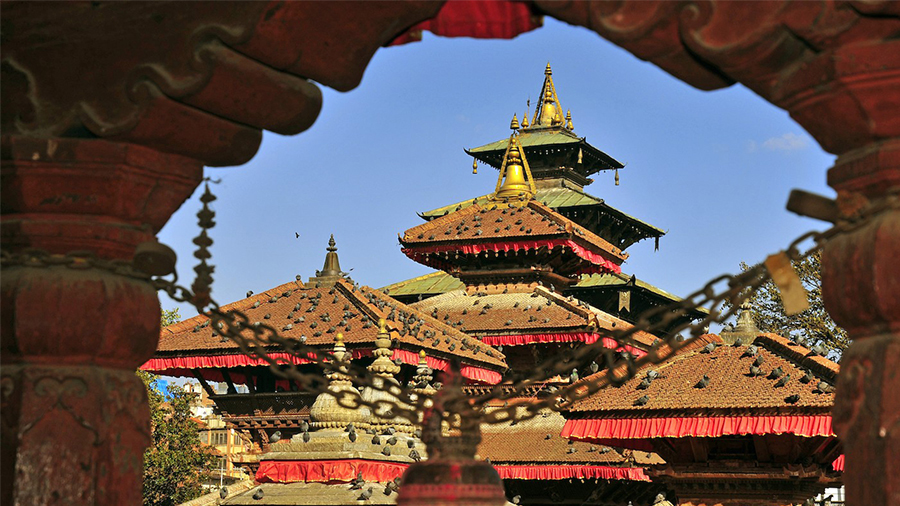
The 323rd anniversary of the iconic Nyatapola Temple in Bhaktapur was celebrated on 26th June with vibrant traditional rituals at Tahmaadi, the place adjoined to Bhaktpaur Durbar Square.
The temple remains one of Nepal’s most revered monuments, celebrated for both its architectural grandeur and deep tantric significance.
To commemorate the occasion, a series of religious and ceremonial activities were held. These included tantric worship, offerings, and a ritual purification of the temple. The temple’s main door was opened to devotees, and the ritual flag atop the temple was ceremoniously replaced. Special worship was also offered to the deities Siddhi Lakshmi, Bhairava, and Betaal.
The historic temple with five tiers of roofs was built in Nepal Sambat 822 (1702 AD) by King Bhupatindra Malla. The construction of this temple lasted for six months from December 1701 to July 1702. The temple has survived four major earthquakes and its aftershocks including the 7.8 magnitude April 2015 earthquake which caused extensive damage the city of Bhaktapur and not a big damage to this temple.
Continuing a long-standing tradition, members of the extended Awaal family participated in cleaning the temple’s roof – a symbolic act of reverence and preservation.

Local people who have been told by their ancestors that the Nyatapola Temple was constructed with the support of people from surrounding neighbourhood. Its completion was marked by a massive celebration and a feast attended by over 30,000 people, highlighting the communal spirit behind its construction. The recent celebration serves as a reminder of the temple’s enduring cultural, religious, and historical legacy in the Kathmandu Valley. Nyatapola Temple’s remarkable craftsmanship and immense height make it an unmissable landmark in Bhaktapur. The temple’s strong foundation and excellent earthquake-resistant construction (1934 and 2015) have helped it withstand the test of time and natural disasters, showcasing the exceptional engineering skills of ancient Nepalese architects.
The of temple reconstruction was carried out with local resources, traditional skills and public voluntary participation in the leading of Bhaktapur Municipality. The cost of last renovation was reduced by nearly a half because more than 4,000 local people give their time and effort for this accomplishment as in the original construction of the temple which is a big example of joining hands the Newar community for the noble causes. (By Ram Dangol)