The royalty to climb Mt. Everest has been increased for the first time nearly after a decade. From September, those seeking to summit the world’s tallest mountain during spring season will have to pay $15,000 (£12,180), a 36% rise on the longstanding fee of $11,000, officials said on Wednesday. Fees for those wanting to climb the mountain during Autumn have to pay $7,500 as royalty and $3,750 during Winter (December to February).
The last royalty fee revision was made on January 1, 2015, when the government switched from a group-based system to a uniform fee of $11,000 per climber for the spring season from the normal route.
For Nepali climbers, the royalty fee for the normal route during the spring climbing season has been doubled from Rs75,000 to Rs150,000. Climbing permits, previously valid for 75 days, will now be limited to 55 days. The reduced validity is aimed at streamlining climbing activities.
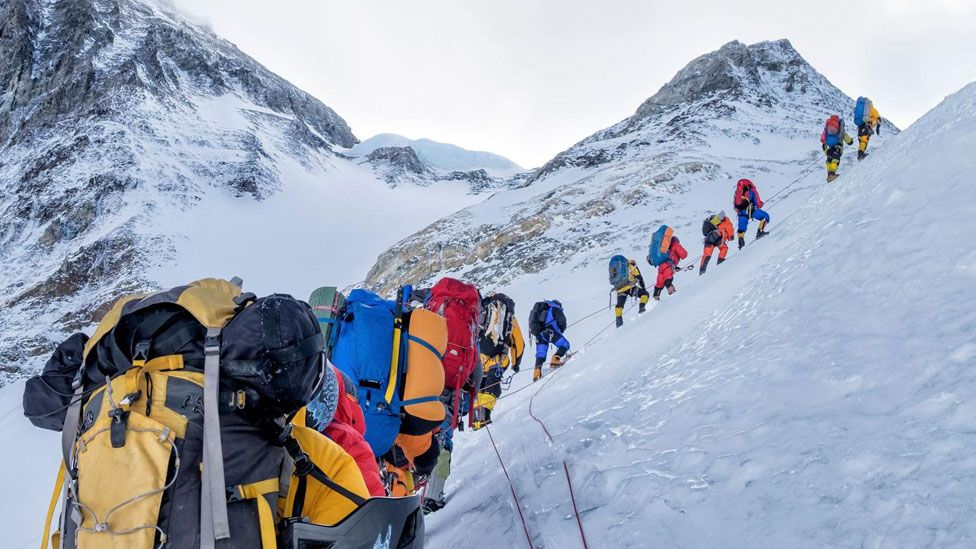
Mountaineering experts often criticise Nepal government for allowing too many climbers on Everest with more than 300 permits issued to climb the mountain per year.
Under the revised rules, from the upcoming spring season, Everest climbers will have to bring their feces back to the base camp for proper disposal. Climbers will also have to carry biodegradable bags to collect garbage in the upper areas as part of a new initiative to adopt sustainable practices. The use of biodegradable bags is now mandatory for climbers scaling peaks over 8,000 meters, as part of a broader effort to address environmental degradation in the Everest region.
Nepal is home to eight of the fourteen mountains higher than 8,000 meters, including Mt. Everest, the highest peak in the world. Mount Everest can be climbed from both Nepal and China, but on the Chinese side, the costs for the climbing permit are even higher.