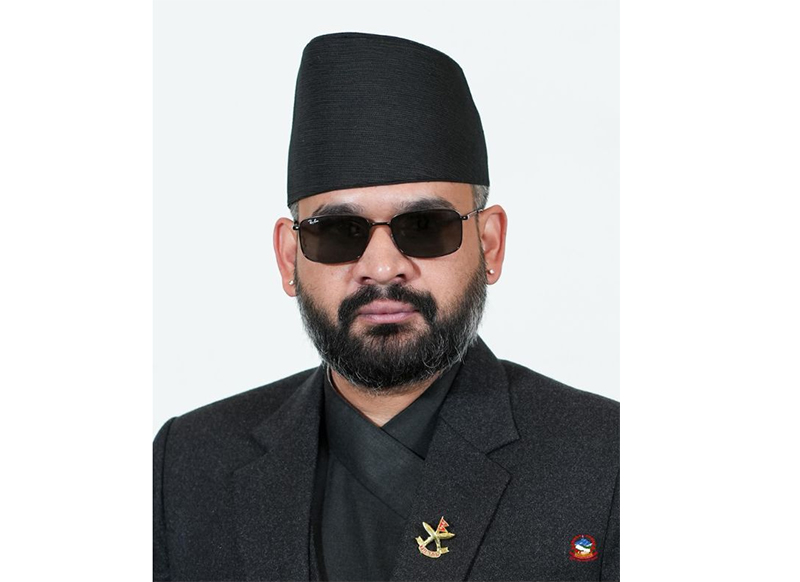
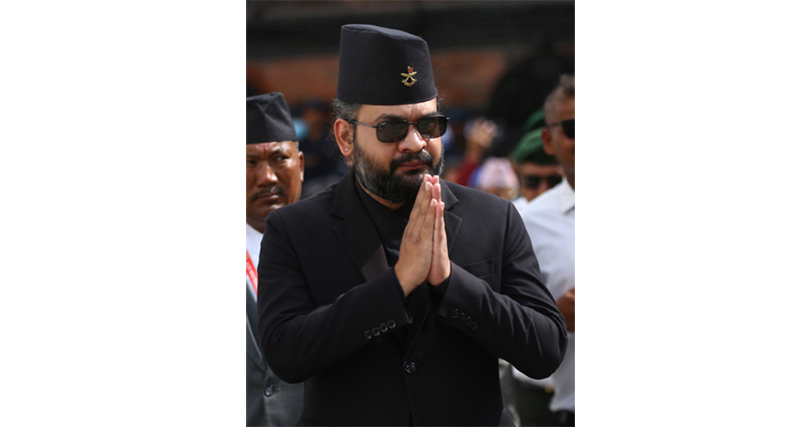
The 26th anniversary of the Independent Power Producers Association of Nepal (IPPAN) has been completed. In a ceremony held on the same occasion, Ganesh Karki, president of IPPAN, said that so far, investments worth 13.1 Kharba (1.31 trillion) rupees have been made in the hydropower sector.
President Karki mentioned that the people have invested heavily in the hydropower sector and said that about 13 million Nepalis have directly or indirectly invested in this sector. He said that the government’s plan to produce 28,500 megawatts of energy is welcome and the goal of exporting 13,500 megawatts for domestic consumption and 15,000 megawatts to neighbouring countries is positive.
Karki said that the contribution of the private sector in hydropower development in Nepal is highly appreciated. He says that if there is no active participation of the private sector, the country will still be in the grip of load shedding.
Addressing the ceremony, Vice President Ramsahay Yadav took the anniversary as a resolution for the future and expressed the government’s commitment to always cooperate for building a self-sufficient, green and prosperous Nepal in energy. He emphasized that since Nepal is the country rich in hydroelectricity and renewable energy, it is necessary to make use of this precious resource and reduce dependence on energy imports. Likewise, he clarified that development is not possible without sufficient energy, saying that energy independence is directly related to economic freedom and national security.
Energy, Water Resources and Irrigation Minister Anil Kumar Sinha said that due to the activeness of the private sector, Nepal has become free from load shedding and exported electricity. At present, Nepal’s total electricity generation has reached about 4,000 megawatts, out of which more than 3,300 megawatts are contributed by the private sector, he said, adding that it is a matter of pride.

According to Minister Sinha, the journey of the private sector, which started with small projects of 5-10 megawatts, has reached to large projects of more than 100 megawatts. He informed that the development of the energy sector has also greatly helped in education, health and local development. He said that an agreement has been reached with India to export 10,000 megawatts of electricity in 10 years and the export process has also progressed in Bangladesh. However, he admitted that challenges such as legal and policy reforms, power purchase agreements, transmission line expansion, forest and land acquisition complications still remain.
Deepak Malhotra, president of the Confederation of Nepal Industries (CNI), has emphasized that for the proper utilization of the increasing hydropower production in Nepal, electricity consumption should be increased in the country.
Malhotra further mentioned that the hydropower sector should be developed as the backbone of the Nepali economy and expressed the view that rapid economic growth can be achieved through electricity consumption. He said that in the context of the government’s target of producing 28,500 megawatts of electricity by 2035, trillions of investments will be required and foreign investment will also be indispensable for that. He emphasized on the need to attract foreign investment through public-private partnership model.
Independent Power Producers’ Association, Nepal (IPPAN) was established in 2001 with the intention of encouraging the private sector to work in the area of hydropower in Nepal. It is a non-profit, non-government autonomous organization.
One of its main purposes is to act as a link between the private sector and government organizations involved in developing hydropower in the country so that Nepalese citizens can get the maximum benefit from the development effort.
Besides this, the organization also helps exchange technology, expertise, knowledge, financial and management information among the independent power producers in the country.