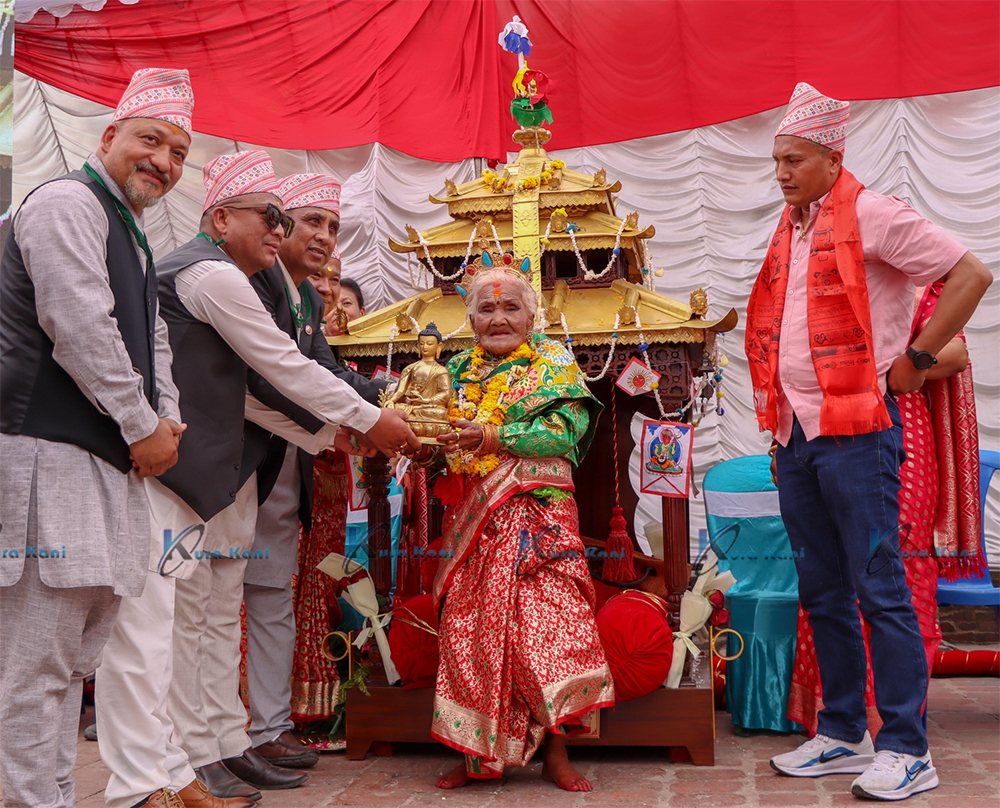
Gunlaa falls during the tenth month of the Nepal Sambat calendar, which is usually corresponds to July-August in the Gregorian calendar. The annual month-long festival at Swayambhu, which begins on the first day of the waxing moon in the month of Shrawan (25 July this year), commenced on Friday.
Gunlaa is connected to ancient Buddhist practice called Vassa or the rainy season retreat. According to Buddhist tradition, monks and followers would stay in one place during the monsoon to avoid harming crops, insects and life in the fields while traveling. During this time, they would devote themselves to meditation, study and teaching of Buddha.
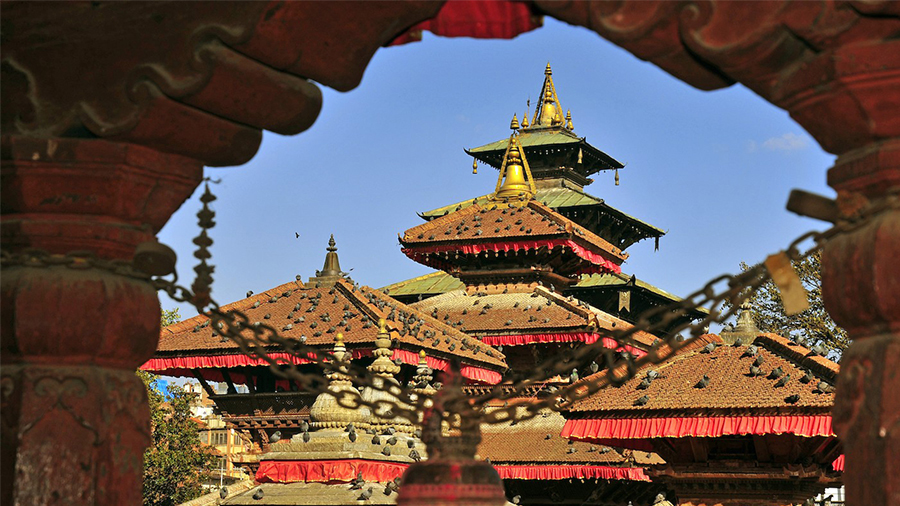
In the same spirit, the Newar Buddhists dedicate the month of Gunlaa to spiritual growth and good deeds. Every morning, groups of devotees of all ages wake early morning to visit Buddhist shrines, stupas, chaityas and monasteries. They walk chanting prayers and playing traditional music known as GunlaaBajaan.
This daily practice helps people to slow down and reflect on their lives. In fast-paced world, Gunlaa gives an opportunity to pause, think about one’s actions, and renew one’s commitment to kindness and mindfulness. Many also take time to study scriptures, listen and engage in personal meditation.

The festival holds deep spiritual significance as it is a time foe meditation, alms giving, music and pilgrimage for the Newar Buddhists. Gunlaa is more than a tradition – its way to reconnect with their faith, honour the teachings of Buddha, and strengthen its ties within the community.
Moreover, the cultural activities in the Kathmandu Valley take round the year. But the cycle takes a pause with celebrating Sithinakhah., and starts with Gathamugah. Gunlaa starts only a day after Gathamugah with bears a significant cultural value as well.
The Newars of the Kathmandu Valley and elsewhere observed the Gathaamugah festival on
on Krishna Chaturdashi in the month of Shrawan to drive away evil spirits, purify the home and restore spiritual protection.
According to a popular legend, a demon named Ghantakarna (with bells in the ears) once roamed the ancient streets of Kathmandu Valley, terrorising women and children. He wore a pair of bells on his ears, and they jingled every time he walked across the streets, signalling his arrival to the fear-stricken locals.
During the festival, at several intersections of Kathmandu’s numerous Newari towns and villages, people erect the effigies of the demon. The structure of Ghantakarna is like a ghost with three legs which are made of hay and grass.
People make an effigy using Giant reed (Arundodonax), in the form of a demon. The demon is put up at crossroads and burnt at the end of the day.
Some also hang up small handmade dolls to burn along the effigy. Some people take the burning of an effigy as the burning of the demonic presence or the end of the yearly duty of the helpful demon.

In the early evening, a person also roams around the community with paints all over his body, taking the form of a demon. He is flanked by a person holding a torch and many others who follow him around. He goes around the locality to beg for food or donation.
The locals pull the effigy to the nearest river, burn it and throw it into the river. In the evening, people perform a small puja at their residences. They offer special materials on clay pots and place them on the way crossing. That is considered pushing out the evil spirits from their residences and locality as well that is called ‘Bauwaayegu’.After that people perform Puja at the doors of the residences.
On Gathamugah, people also wear iron rings on this day as they believe iron keeps evil spirits away. In middle of the Gunlaa festival, JanaiPurnaima is observed on the full moon day. That is also a day for Kwaati soup. GaaiJatra is observed a day after Janai Purnaima.