Nepal is graduating from a Least Developed Country (LDC) to a ‘developing country’ status in November 2026. This shift marks a crucial phase in the nation’s socio-economic development. As such, the country should be able to tap the opportunities and tackle the challenges from this graduation.
National Planning Commission has formulated Nepal’s LDC Graduation Smooth Transition Strategy to ensure a smooth, quality, and sustainable transition, recognizing the opportunities and challenges this change brings. The strategy aligns with Nepal’s vision of achieving Good Governance, Social Justice and Prosperity, comprising six strategic pillars: macroeconomic stability, trade and investment, economic transformation, productive capacity, climate change and disaster risk management, and social inclusion. It serves as a roadmap to graduate successfully and to ascent further on the development ladder, building a Nepal that is economically robust, socially inclusive, and environmentally sustainable. The UNDP Report of 16th May 2024 had stated.
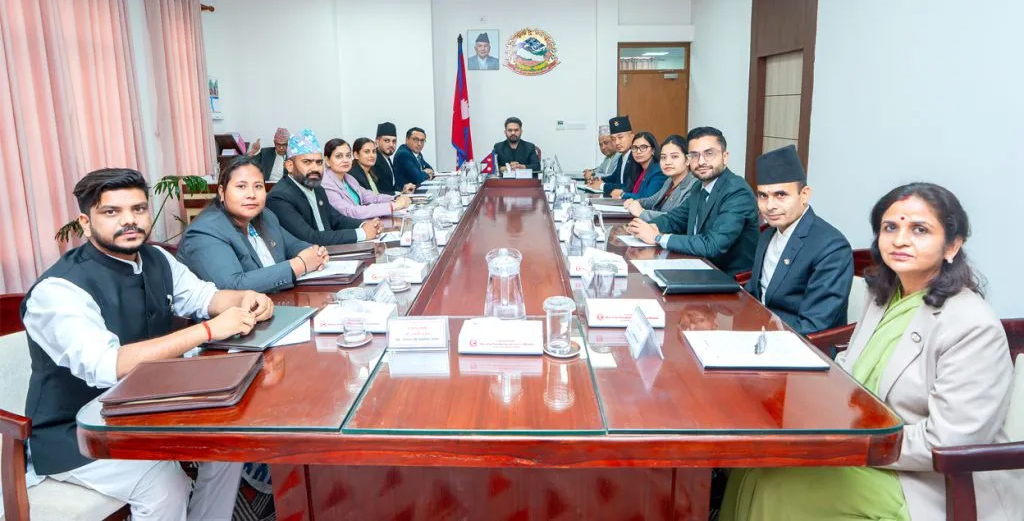
Vice chairman of the National Planning Commission Prof Dr Shivaraj Adhikari has said that the process of upgrading Nepal’s developing countries would increase credibility and open up new opportunities for international cooperation, trade and investment. Speaking at a high-level national workshop on ‘Upgrading Nepal from least developed country: Nepal’s easy upgradation strategy challenges and future course of action’ held in Kathmandu on Thursday, Vice-Chair Adhikari stressed the need for strategic preparations for long-term and sustainable transformation including upgradation.
“We have made remarkable progress and now there is a need for more investment, effort, and a clear national direction, it is time to demonstrate Nepal’s potential,” Adhikari said. Stating that there are still some challenges such as low productivity, weak economic diversification, slow structural transformation and vulnerability to the climate crisis, he said the goal now is not only to upgrade but also to make it easy, quality and long-term. Vice President Adhikari said that the ‘Easy Transformation Strategy’ prepared by the Government of Nepal to guide this transformation is a comprehensive framework that will help in risk management, utilization of opportunities, and coping with dilemmas.
It is to note that Developing and Underdeveloped Countries have key differences. Developing countries are generally characterised by lower income level, less industrialization, and lower standard of living than developed nations, but are actively working towards economic and social progress. Underdeveloped countries, on the other hand, often fare persistent poverty, limited access to resources, and slower progress in development.
Experts opine that Nepal’s economic strategy upon graduation to a developing country should focus on diversifying economy, boosting export competitiveness, attracting foreign investment, and building resilience to external shocks. This includes strengthening macroeconomic stability, enhancing trade competitiveness, improving the investment climate, and strategically investing in key sectors like hydropower, tourism, and digital services
In addition, Asian Development Bank (ADB), on 17th June, unveiled its new Country Partnership Strategy (CPS) for Nepal for 2025–2029, setting a comprehensive agenda to support the country’s inclusive, resilient, green, and employment-intensive economic growth.
The strategy focuses on three strategic priorities: private sector-led, employment-intensive, green economic transformation; inclusive and quality human capital development and public services; and environmental sustainability and climate resilience. “As Nepal advances toward graduating from least developed country status, the CPS will support the country’s transition to a more sustainable and inclusive growth model,” said ADB country director for Nepal Arnaud Cauchois. “This model prioritizes productivity gains and job creation through domestic private investment and foreign direct investment, improved access to quality infrastructure, skills development, deeper integration with regional and global value chains and exports, while also strengthening resilience to disasters and climate change.”
The CPS is aligned with Nepal’s 16th Five-Year Plan, which seeks to promote good governance, social justice, and shared prosperity, and the government’s Green, Resilient, and Inclusive Development (GRID) approach, which focuses on integrating environmental sustainability, climate resilience and social inclusion into development efforts. The strategy incorporates cross-cutting themes such as digital development, good governance, and capacity building for federalism, and empowerment of women and disadvantaged and vulnerable groups to ensure that development benefits reach all segments of society.
To maximize impact, ADB will ensure selectivity, integration, and synergies in its support by focusing on the primary objectives of private sector-led growth, youth employment, and resilience. Given the dynamic country context and global uncertainties, ADB’s country program will remain flexible. ADB’s investments will be delivered through investment projects, policy-lending, and sector development programs that combine policy reforms, institutional strengthening and investments. The CPS was prepared through a joint strategic approach with the World Bank Group country partnership framework which creates opportunities for continuous deep collaborations between the two organizations. ADB and the World Bank Group – together accounting for around 70% of Nepal’s development financing—have been increasing collaboration through joint policy dialogues, portfolio reviews, knowledge sharing, and potential co-financing of projects, under the 2025 Full Mutual Reliance Framework.
A low-risk Group A developing member, Nepal will be eligible to access concessional ordinary capital resources (COL) and ADB expects to mobilize about $2.3 billion (COL) between 2025 and 2029 and selective grants from the Asian Development Fund 14 which are allocated on a project basis for specific thematic priorities. Commitment of these funds is guided by government priorities, project readiness, and the country’s performance. ADB will also support the mobilization of additional resources through cofinancing, innovative financing solutions, exploring mobilization of funds from green bonds and the issuance of thematic and local currency bonds (such as Nepalese rupee-linked bonds) to international investors. ADB is a leading multilateral development bank supporting inclusive, resilient, and sustainable growth across Asia and the Pacific. Working with its members and partners to solve complex challenges together, ADB harnesses innovative financial tools and strategic partnerships to transform lives, build quality infrastructure, and safeguard our planet. Founded in 1966, ADB is owned by 69 members – 50 from the region.