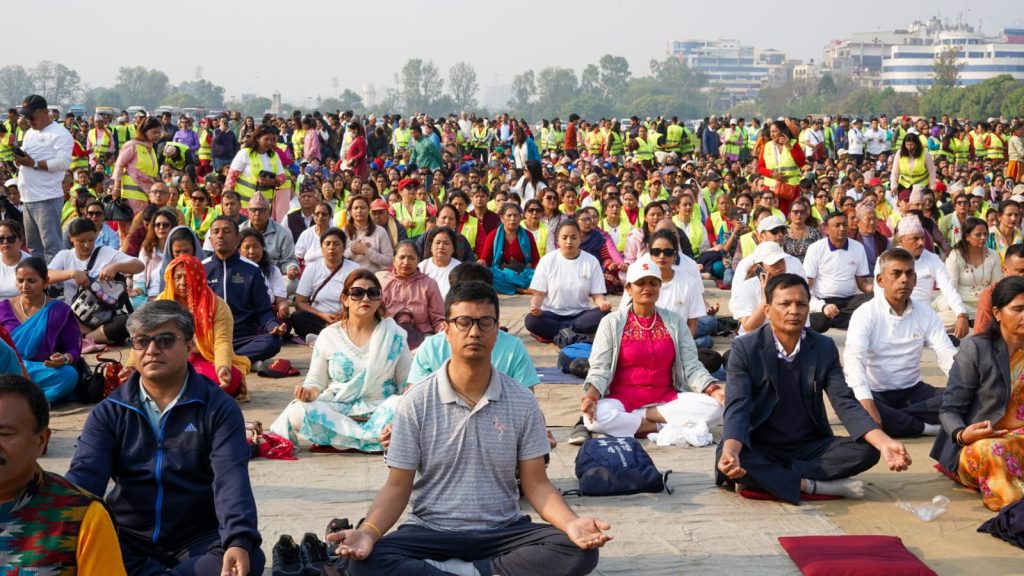
The International Day of Yoga is a day celebrated across the world annually on 21 June, following its adoption by the United Nations in 2014. This year, the International Day of Yoga celebrated with the theme” Yoga for One Earth, One Health,” which echoes a vital truth that personal wellness and planetary health are inseparably linked.
Yoga is an ancient physical, mental and spiritual practice that originated in India. The word ‘yoga’ derives from Sanskrit and means to join or to unite, symbolizing the union of body and consciousness. It is widely recognized that Yoga integrates the body, mind, spirit, and soul, offering a holistic approach to health and well-being that brings peace to our hectic lives.
As Yoga exercises have shown significant benefits for physical and mental well-being, it was considered important by the UN to globally promote this wellness practice, which originated in ancient India.
The initiative for “Yoga Day” was taken by India’s Prime Minister Narendra Modi in his 2014 UN address. and the related resolution received broad global support, with 177 nations co-sponsoring it in the United Nations General Assembly, where it passed unanimously. Subsequently, the first International Yoga Day was celebrated successfully on 21 June 2015, across the world including New York, Paris, Beijing, Bangkok, Kuala Lumpur, Seoul and New Delhi.
The draft resolution establishing the International Day of Yoga was proposed by India and endorsed by a record 175 member states. The proposal was first introduced by Prime Minister Narendra Modi in his address during the opening of the 69th session of the General Assembly, in which he said: “Yoga is an invaluable gift from our ancient tradition. Yoga embodies unity of mind and body, thought and action … a holistic approach [that] is valuable to our health and our well-being. Yoga is not just about exercise; it is a way to discover the sense of oneness with yourself, the world and the nature.”
The resolution notes “the importance of individuals and populations making healthier choices and following lifestyle patterns that foster good health.” In this regard, the World Health Organization has also urged its member states to help their citizens reduce physical inactivity, which is among the top ten leading causes of death worldwide, and a key risk factor for non-communicable diseases, such as cardiovascular diseases, cancer and diabetes.
In the Vedic age, yoga taught by sages in the lap of the Himalayas became extinct in Nepal. The work of public awareness has been started by declaring Renaissance Day in this area.
In ancient times mental peace stability and health were achieved through yoga, meditation and Ayurveda.
In order to observe the Yoga Day with a grand matter, a meeting with Prime Minister K. P. Sharma Oli was held at the PM’s official residence at Baluwatar on 16th June. Representatives from various ministries and Yoga tutors participated in the meeting.
During the meeting Prime Minister was briefed about the formation of the Yoga Day Celebration Main Committee from the three-tier government to observe the Day.
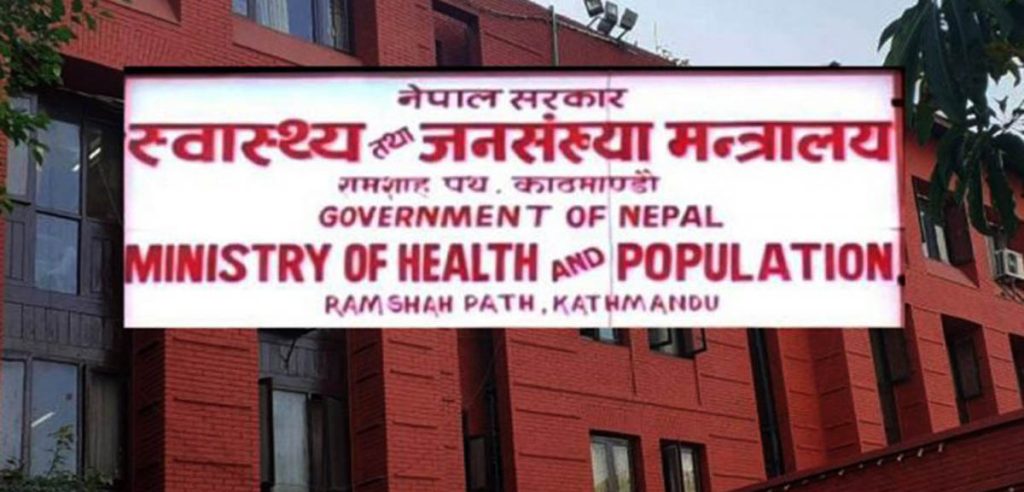
On the occasion, the Prime Minister stressed the need of developing the Yoga practice as a lifestyle and implementing it in line with the ‘Nirogi Nepal Abhiyan (Healthy Nepal Campaign)’.
The team comprised Minister for Education, Science and Technology, Raghuji Panta, LP Bhanu Sharma, the founder of Jeevan Bigyan (a Yoga practice Centre) and Ramesh Nepal, a yoga tutor, among others.
At the federal level, the government formed the Main Celebration Committee on June 12, with Shiva Kumar Sapkota as the member secretary. He was also present at the meeting with the Prime Minister.
On this occasion, Minister Panta stressed the need of promoting the practice of yoga in schools and encouraged youth participation in the discipline. The Indian Embassy in Nepal hosted Yoga Day event in Lumbini, the birth place of Gautam Buddha on the eve of the grand celebration on June 21. Moreover, International Yoga Day was organised in many cities around the world as importance for health and lifestyle of the human being has been well recognised. (By Ram Dangol)