Nepali Congress chairperson Sher Bahadur Deuba has said that the private sector has made a great contribution to the development of the economy.
He was speaking at an interaction programme organized by the Nepali Congress’s Department of Industry and Trade Monday in Kathmandu. Deuba stated that the role of the private sector is important for the country’s economic prosperity.He also said that the government should support in addressing the ‘agenda’ raised by the private sector.”The role of the private sector is important in growth of domestic productions,” he added. That also increase employment opportunities, he further said
“The digital economy also occupies a large share. Therefore, the budget for the coming fiscal year should be of a kind that encourages the digital economy. This will help in the promotion of information technology,”Deuba stressed.
Deuba expressed confidence that the budget for the upcoming fiscal year will address the issues raised by the private sector and make the economic sector more dynamic.
On the occasion, Federation of Nepalese Chambers of Commerce and Industry (FNCCI) has given various suggestions to the Nepali Congress regarding the budget for the fiscal year 2082-83. He was speaking at a discussion prgramme organized by the Department of Industry and Trade of Nepali Congress on Monday in Kathmandu.
Chandra PrasadDhakal, the president of FNCCIurged the Nepali Congress which is the largest political party in parliament, to expand an open economy with social justice and implement structural reforms for a new phase of economic reform. He suggested that aspects such as revenue mobilization and the effectiveness of public spending should be included in its objectives and priorities.
Dhakal said political and policy instability has been identified as an obstacle to industrial and business expansion, according to a study conducted by the FNCCI across the country. He urged the government to declare the coming decade as the investment decade and implement an integrated investment plan related to investment.
“Many countries have achieved economic growth by stabilizing policies and institutions. Thailand is an example of that.” Therefore, we consider that the Nepali Congress, being the largest party, should take the initiative for an all-party consensus for policy stability and building a strong institution. All political parties should agree not to change policy for at least the next ten years. “This will end the situation of misinterpretation of the law and conflicting laws,” said chairman Dhakal.
The biggest problem in Nepal’s budget process for nearly two decades has been suffered of the lack of capital expenditure. only around 17 percent of the budget being spent on capital expenditure while the trend of spending only around 60 percent has resulted in the country not achieving the expected development, not creating demand in the market, and affecting private sector businesses, he explained.
FNCCI, the apex body of Nepal’s business community therefore suggests that when determining the size of the budget for at least the next two years, it should be determined in a way that does not increase actual expenditure by more than 15 percent without affecting capital expenditure. To reduce public frustration and attract youth to business, ensuring good governance, maximum use of technology for good governance, and provision to do everything from business registration through the Citizen App and the federation has suggested ending the obligation to renew businesses and making arrangements for renewal based on revenue payment.
Likewise, the organisation strongly suggests that it is necessary to bring the current fiscal year’s policies, programmes, and budget as a starting point for such reforms, including the promotion of good governance, the end of the use of retroactive laws, and the practice of changing laws immediately.
The economy of the country is basically supported by remittances while various study reports projecting that demographic gains will not continue after 2045, the economy dependent on remittances will be at risk, chairman Dhaka. He added that it is necessary to formulate the upcoming budget to advance the second phase of economic reforms.
Referring a study jointly conducted by the Federation with the World Bank, the private sector contributes 81 percent to the economy and he said that with 86 percent of employment provided by the private sector, all parties should publicly acknowledge the importance of the private sector and ensure an environment where entrepreneurs can conduct business with respect.
With an average economic growth rate of 4 percent over the past three decades, nearly 6 million people are working abroad due to low economic growth, which has reduced employment opportunities and imports have increased by 9 times, Dhakal suggested bringing a budget that would maximize benefits from the agriculture, tourism, energy, and information technology sectors and create jobs in the country by promoting import substitution and exports.
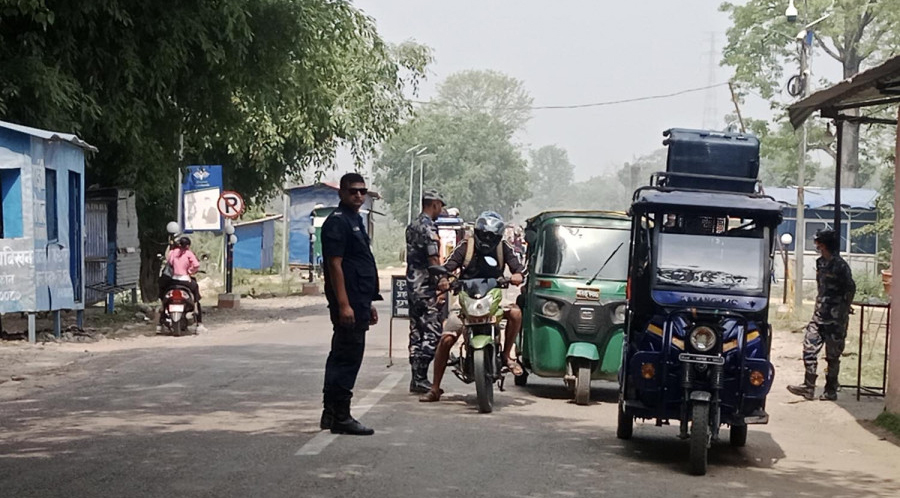
Similarly, to control unauthorized trade, there should be an arrangement for information exchange and joint patrols in coordination with border security agencies of neighbouring countries. Moreover, non-tax revenue (such as fees, duties, penalties, etc.) collected by the Government are scattered under various laws and regulations. They should be integrated under a non-tax related umbrella act, Dhakal suggested.
The Nepali Congress organized this programme to seek suggestions from the private sector. NC chair Sher Bahadur Deuba, general secretary Gagan Thapa and other office bearers were present in the interaction.