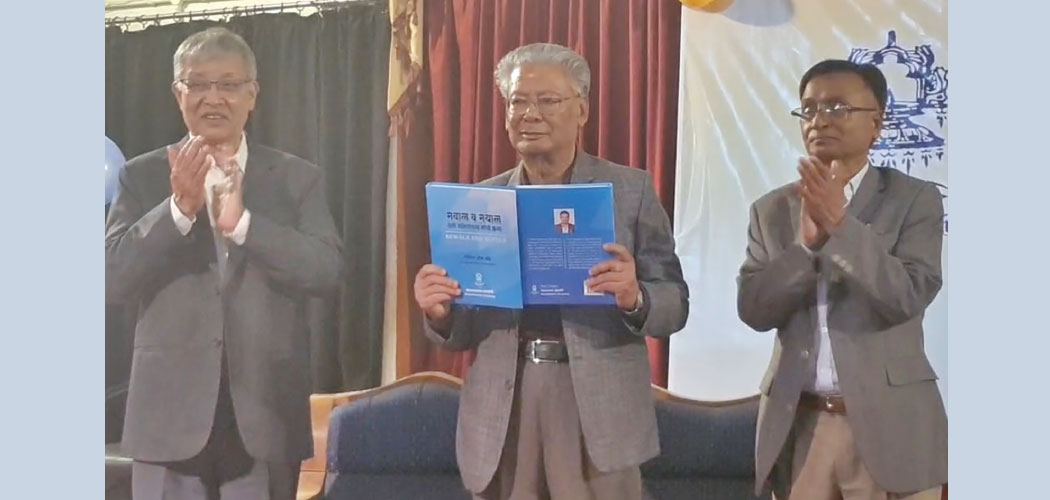
A book ‘Newal wo Nepal’ (Nepal of the Newars) authored by Dr. Govinda Bol Shrestha was released on Friday at the Nepalbhasa Academy, Kirtipur. The book is in Nepalbhasa and English language.
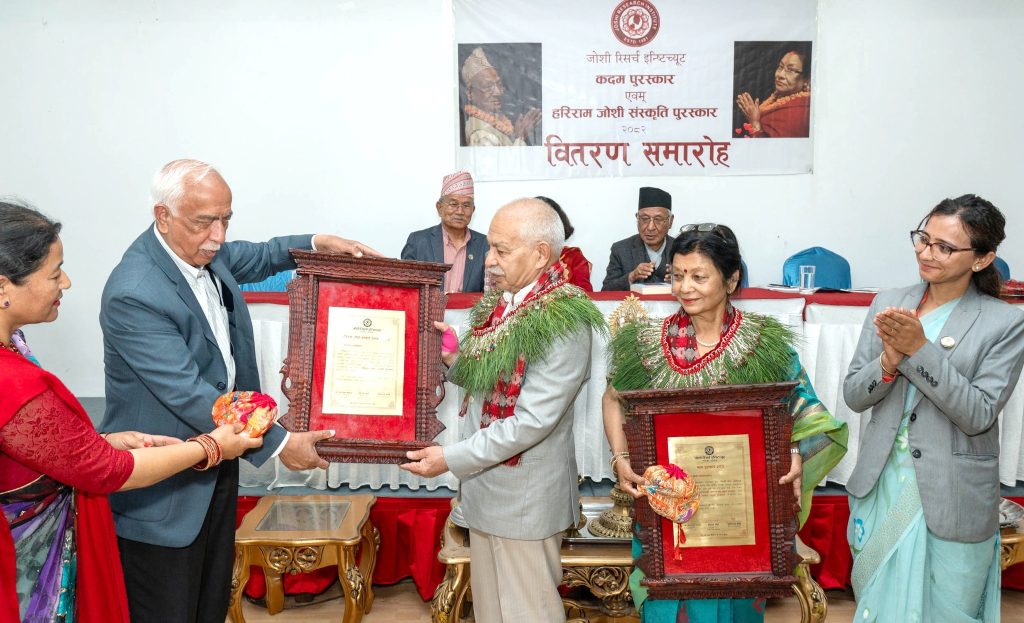
YagyaRatnaDhakhwa, patron of the Nepalbhasha Academy released the book amidst a function. Releasing the book, Dhakhwa expressed his appreciation for the book’s effort in capturing the geography and cultural heritage of the Newar community and Nepalbhasa.
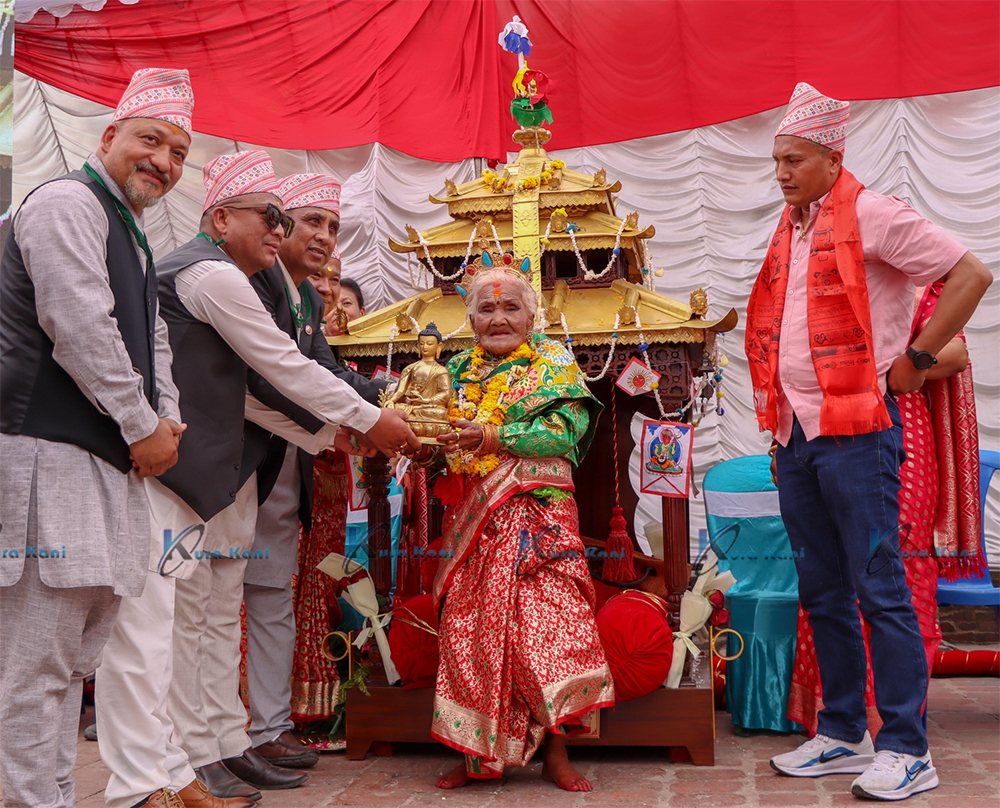
During the event, Malla K. Sundar, chancellor of Nepalbhasha Academy emphasised that the Newar community possesses a unique culture and tradition that define its civilization.
Noor Kumar Tamrakar and Pushpa Lochan Shrestha presented their review of the book.
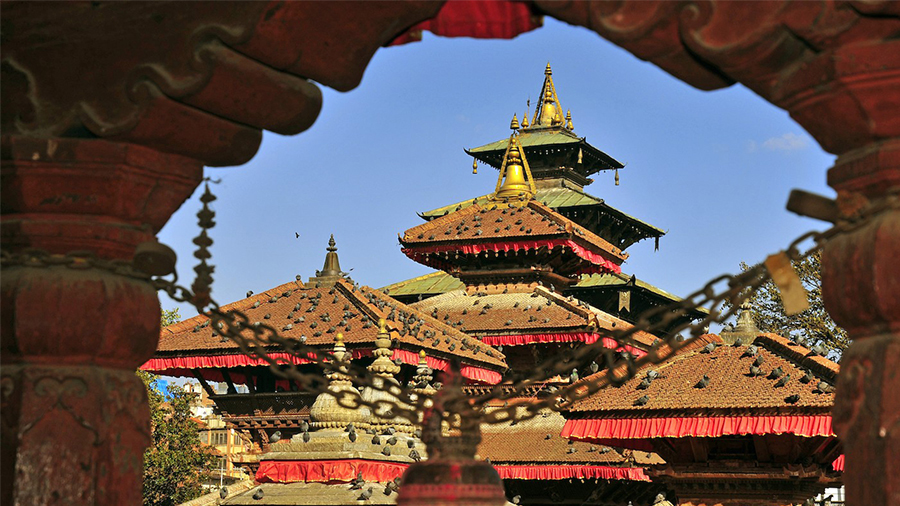
The Newars are primarily inhabitants in the Kathmandu Valley of Nepal and its surrounding areas, and the creators of its historic heritage and civilisation. These people constitute a distinct linguistic, cultural group and ethnicity linked to Indo-Aryans and Tibeto-Berman. Nepal Bhasa is a common language to all the Newars. The Newars have continued their age-old traditions and practices and pride themselves as the true custodians of the religion, culture and civilisation of Nepal. The Newars are known for their contributions to culture, art and literature, trade, agriculture and cuisine. Today, they consistently rank as the most economically and socially advanced community in Nepal, according to the annual Human Development Index published by UNDP. The Newars are ranked the 8th largest ethnic group in Nepal according to the 2021 Nepal census numbering 1,341,363 people constituting 4.6% of the total population.
The Kathmandu Valley and surrounding territories constituted the former Newar kingdom of the Nepal Mandala.
The terms “Nepâl”, “Newâr”, “Newâl” and “Nepâr” are phonetically different forms of the same word, and instances of the various forms appear in texts in different times in history. Nepal is the literary (Sanskrit) form and Newar is the colloquial (Prakrit) form.A Sanskrit inscription dated to 512 in Tistung, a valley to the west of Kathmandu, contains the phrase “greetings to the Nepals” indicating that the term “Nepal” was used to refer to both the country and the people.