The International Monetary Fund (IMF) has approved a loan of $41.8 million to Nepal under the Extended Credit Facility (ECF), bringing the total amount disbursed to $289.1 million. The IMF commended Nepal for its efforts in implementing economic reforms but highlighted concerns about weak domestic demand, political instability, and the potential for financial risks.
The IMF forecasts a 4.2% growth rate for Nepal in FY2024/25, driven by capital spending and hydropower development. Inflation, spurred by flood disruptions, is expected to stabilize at 5%. However, the IMF also urged the government to strengthen fiscal discipline, reform the financial sector, and implement anti-money laundering measures, especially after Nepal’s inclusion on the Financial Action Task Force (FATF) grey list.
On March 12, 2025, the executive board of the International Monetary Fund (IMF) completed the fifth review under the four year Extended Credit Facility (ECF) for Nepal, allowing the authorities to withdraw the equivalent of SDR 31.4 million (about US$ 41.8 million) under the ECF. This brings total disbursements under the ECF for budget support thus far to SDR 219.7 million (about US$ 289.1 million).
The ECF arrangement for Nepal was approved by the Executive Board on January 12, 2022 for SDR 282.4 million (180 percent of quota). Nepal has made tangible progress in implementing reforms under the program, which has supported early signs of economic recovery while preserving macroeconomic and financial stability and protecting the vulnerable.
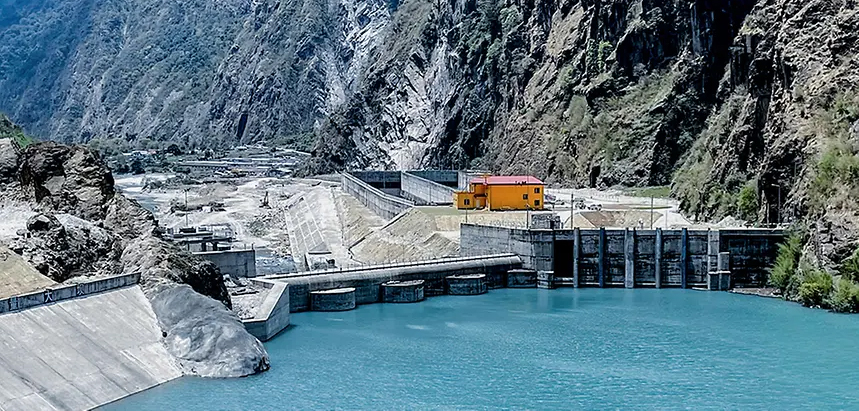
The economy continues to face challenges with subdued domestic demand. Economic activity is expected to pick up moderately in FY2024/25 on account of disruptions caused by the September 2024 floods. Growth is expected to reach 4.2 percent in FY2024/25, supported by a planned increase in capital spending including on reconstruction, an accommodative monetary policy stance, and additional hydropower generation. Post-flood supply-side pressures are expected to be short-lived, and average inflation is projected to remain close to the Nepal Rastra Bank’s target of about 5 percent. Efforts to mobilize revenues will support development spending and fiscal sustainability. The outlook is subject to important downside risks including those related to possible under-execution of capital spending, financial-sector vulnerabilities, and political fragility.
Mr. Bo Li, Deputy managing director, mentioned that “Executive Directors welcomed the continued recovery and the broadly adequate performance under the program, acknowledging the challenges posed by political uncertainty and recent flood-related disruptions. They noted that while the outlook remains broadly favourable, it is subject to downside risks. Accordingly, Directors encouraged continued prudent policies to safeguard macroeconomic stability and steadfast implementation of structural reforms to foster sustainable and inclusive growth. Fund capacity development will also be important to achieve program objectives.
“Nepal has made tangible progress in implementing reforms under the programme, which has supported early signs of economic recovery while preserving macroeconomic and financial stability and protecting the vulnerable,” the IMF states in its press note.
“Directors called for ambitious structural reforms to support more sustainable and inclusive growth. They recommended efforts to reduce the high cost of doing business, enhance the investment climate, improve governance, and strengthen anticorruption institutions. Nepal’s high vulnerability to natural disasters underscores the importance of enhancing resilience to climate shocks,” according to the Press Statement.