The World Economic Forum (WEF) is an international non-governmental organisation for public–private sector collaboration based in Geneva, Switzerland. It was founded on 24 January 1971 by German engineer Klaus Schwab.
The foundation’s stated mission is “improving the state of the world by engaging business, political, academic, and other leaders of society to shape global, regional, and industry agendas”. The Forum programmatically promotes a multi-stakeholder governance model, stating that the world is best managed by a self-selected coalition of multinational corporations, governments and civil society organisations (CSOs), which it expresses through initiatives like the “Great Reset” and the “Global Redesign”.
The foundation is mostly funded by its 1,000 multinational companies, who are its member too.
The WEF is well known for its annual meeting at the end of January in Davos, a mountain resort in the eastern Alps region of Switzerland.
Aside from Davos, the organization convenes regional conferences. It produces a series of reports, engages its members in sector-specific initiatives and provides a platform for leaders from selected stakeholder groups to collaborate on projects and initiatives.
The World Economic Forum and its annual meeting in Davos have received criticism over the years, including the organisation’s corporate capture of global and democratic institutions, its institutional whitewashing initiatives, the public cost of security, the organization’s tax-exempt status, unclear decision processes and membership criteria, a lack of financial transparency, and the environmental footprint of its annual meetings.
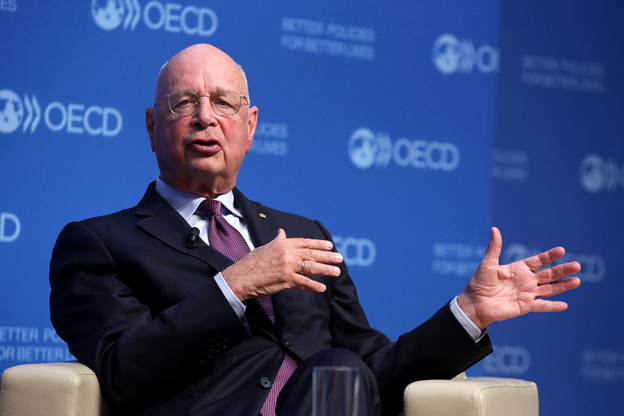
Amid rising geopolitical tensions, this time, close to 3,000 policy-makers, business executives, international organization and civil society leaders, academics and innovators from around the world assembled for the 54th Annual Meeting of the World Economic Forum to rebuild a basis of trust, generate new ideas and develop partnerships that can improve outcomes for people, economies and the planet.
More than 450 sessions and workshops took place during the Annual Meeting 2024, facilitating dialogue, debate and alignment across many perspectives. Over the course of the week, the Forum and its partners also launched or advanced more than 50 high-impact initiatives, serving as ongoing platforms for multi-year collaboration across geographies and industries.
“We must rebuild trust – trust in our future, trust in our capacity to overcome challenges, and most importantly, trust in each other,” said Klaus Schwab, Founder and Executive Chairman of the World Economic Forum. “Trust is not just a feeling; trust is a commitment to action, to belief, to hope.”
World leaders called for rebuilding trust in the face of increasing fragmentation:
“Geopolitical divides are preventing us from coming together around global solutions for global challenges,” said United Nations Secretary-General António Guterres.
“It is essential that we discard prejudice, bridge differences and work as one to tackle the trust deficit,” said Li Qiang, Premier of the People’s Republic of China.
“The world is not at a single inflection point; it is at multi-inflection points,” warned Ursula von der Leyen, President of the European Commission. She urged countries to “deepen global collaboration more than ever before.”
Ajay S. Banga, President of the World Bank Group, emphasized the interconnectedness of crises; “We cannot think about eradicating poverty without caring about climate. We cannot think about eradicating poverty without thinking about healthcare. We cannot think about eradicating poverty without thinking about food insecurity and fragility.”
“We have a responsibility to be stewards of our beautiful, small planet’s future,” said Kristalina Georgieva, Managing Director of the International Monetary Fund. “There is something that leaders need to embrace,” she added, “and it is the responsibility to act, even if it’s not popular.
French President Emmanuel Macron called for world leaders to “be realistic but be optimistic” about addressing the complex challenges of peace and security, jobs and decarbonization. “I truly believe that the decisions that can change things are within our hands,” he said.
Ukrainian President Volodymyr Zelenskyy announced plans for a potential global summit to push for peace and called for renewed investment in the country. “Strengthen our economy, and we’ll strengthen your security,” he told participants, adding that there will be growth in Ukraine once the war is over. More than 80 national security advisers from governments and international organizations met in Davos to advance a blueprint for peace in Ukraine at the Fourth National Security Advisors Meeting, hosted by Switzerland in collaboration with the Forum.
A series of sessions addressed the conflict in the Middle East. Mohammed Shyaa Al Sudani, Prime Minister of Iraq, warned that unless the international community acts now to end the conflict, there is a risk of a stalemate and a possible expansion of hostilities in the region. Jordanian Prime Minister Bisher Hani Al Khasawneh emphasized the need for a comprehensive ceasefire in Gaza and the importance of international support for humanitarian efforts. Qatari Prime Minister Sheikh Mohammed bin Abdulrahman Al-Thani called for protecting shipping security in the Red Sea and for a meaningful dialogue to end the war in Gaza. Israeli President Isaac Herzog called for new approaches to peace and security for both Israelis and Palestinians. Mohammad Mustafa, Chairman of the Palestine Investment Fund, highlighted the complexities surrounding governance and the need for Palestinian unity, and emphasized the financial and logistical needs for reconstructing Gaza.
“I can’t think of a time when there’s been both a greater multiplicity and greater complexity of the challenges that we’re dealing with,” said Antony Blinken, Secretary of State of the United States.
On the role of the meeting in providing a space for diplomacy and diverse viewpoints, Børge Brende, President of the World Economic Forum, said: “The Annual Meeting serves as a vital platform for inclusive dialogue, bringing together parties to identify pathways toward achieving shared priorities.”(Agencies)